October 12, 2026 · 8 min read
Furnace Won't Turn On? What to Check Before Calling for Furnace Repair in Moore, OK
Five things to check when your furnace won't start on the first cold morning, which smells and noises are normal, and when it's time to call RCI for furnace repair in Moore and the OKC metro.
By the team at RCI HVAC & Construction Services
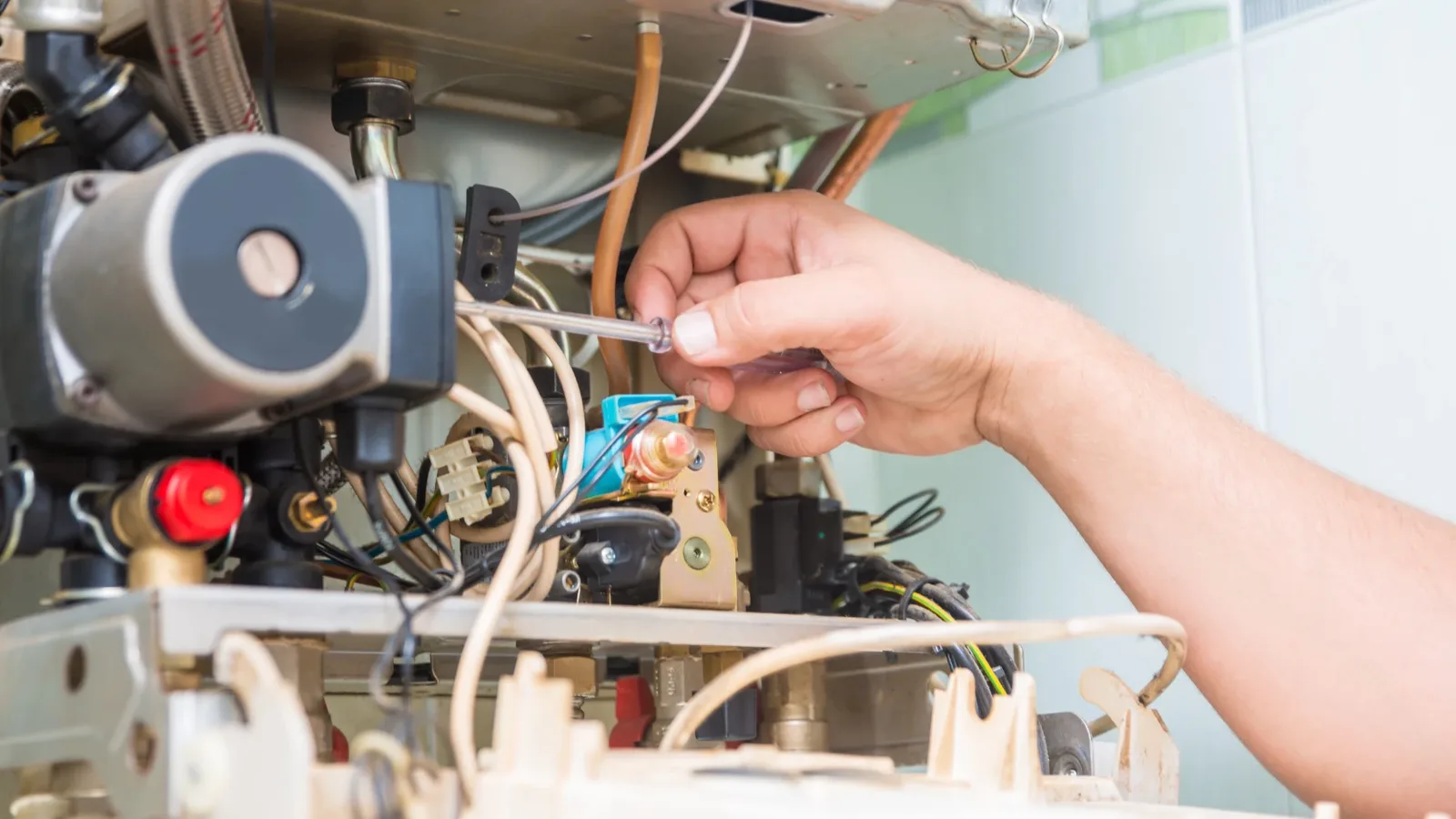
Every October the same thing happens across Moore, Norman, and Oklahoma City. The first real cold front rolls through overnight, somebody bumps the thermostat up before coffee, and nothing happens. No whoosh of the burners, no warm air, just a cold house and a furnace that sat untouched since March. The team at RCI HVAC & Construction Services has answered that call for 27 years, and a surprising share of them end with something a homeowner could have checked in five minutes. This guide walks through those checks first, then covers what the common failures actually mean and when it is time to stop poking at it and call for furnace repair.
Five Things to Check Before You Call
Work through these in order. None of them requires tools, and none of them involves opening the gas side of the furnace.
1. The thermostat
Make sure the thermostat is set to Heat, not Cool or Off, and that the set temperature is a few degrees above the room temperature. If the display is blank or dim, replace the batteries. Smart thermostats can also lose their Wi-Fi connection or drop a schedule after a power blip, so check that it is actually calling for heat. On many models you will see a small flame icon or the word Heating when it is.
2. The furnace power switch and breaker
Most furnaces have a switch on or near the unit that looks exactly like a light switch. It gets flipped off by accident more often than you would think, especially in a utility closet or attic where it shares space with storage. Check it, then check the breaker panel for a tripped breaker labeled Furnace, Air Handler, or HVAC. Reset it once. If it trips again, stop there and call us, because a breaker that keeps tripping is protecting you from an electrical fault.
3. The air filter
Pull the filter and hold it up to a light. If you cannot see light through it, the furnace may be shutting itself down on a high-limit safety because it cannot move enough air across the heat exchanger. Put in a fresh filter, wait a few minutes, and try again. Homeowners in Moore and Yukon who run their systems hard all summer often find the filter they meant to change in July is still in there.
4. The furnace door
Modern furnaces have a door safety switch. If the blower compartment panel is not seated and latched, the furnace will not start at all. If anyone has been in the closet or attic recently, make sure the panel is pushed fully closed.
5. The gas supply
If you have a gas furnace, confirm the gas valve on the supply line is open. The handle should run parallel to the pipe. If your water heater or stove is also gas and is working fine, the supply to the house is almost certainly on. If you smell gas at any point, leave the house and call your gas utility first, then call us.
Normal First-Start Smells and Noises
A faint burning-dust smell on the first heat of the season is normal. Dust settles on the heat exchanger and burners over the summer and burns off in the first few minutes. It should clear within half an hour. A smell that is sharp, electrical, or like melting plastic is not normal and means you should shut the furnace off at the switch and call. A gas or rotten-egg smell is an emergency.
Some clicking at startup is also normal. That is the igniter and gas valve sequence. What is not normal is clicking that repeats without the burners ever lighting, a loud bang or boom when the burners finally catch, or a high-pitched squeal from the blower.
What the Common Failures Actually Mean
If the five checks above did not get you heat, one of these is usually the reason. We list them so you understand what the technician is looking at, not so you try to fix them yourself.
The igniter
Most furnaces installed in the last 20 years use a hot surface igniter, a small ceramic element that glows orange to light the gas. They are brittle and have a limited life. If you hear the furnace start, hear the gas valve click, and then everything shuts down without a flame, a failed igniter is the first suspect. It is one of the cheaper furnace repairs, which is one reason we always say call before you assume the furnace is done.
The flame sensor
A flame sensor is a thin metal rod that tells the control board the burners actually lit. When it gets coated with oxidation, it reports no flame even though the burners are running, and the furnace shuts the gas off within seconds. The symptom is a furnace that lights, runs a few seconds, and quits, then tries again. Cleaning the sensor is part of every fall tune-up we do, and it is the single most common reason a furnace short cycles in October.
The pressure switch or inducer motor
Before the burners light, a small inducer fan runs to pull exhaust through the flue. A pressure switch confirms that fan is moving air. If the inducer is weak, the flue is blocked, or the switch tubing is cracked, the furnace will not light. Homeowners sometimes describe this as "it hums but never fires."
The control board
The control board sequences everything. When it fails, the symptoms are all over the place: no response at all, a blower that runs constantly, or a diagnostic light blinking a fault code. Many furnaces have a small window on the door where you can see that light. If you note the blink pattern before you call, it helps us arrive with the right part.
The blower motor or capacitor
If the burners light and you can feel heat at the furnace but little or no air comes out of the vents, the blower motor or its capacitor may have failed. The furnace will then shut down on its high-limit switch to protect the heat exchanger. Running it this way repeatedly can crack the heat exchanger, so it is worth getting looked at promptly.
When to Stop and Call
Call for furnace repair if:
- The breaker trips a second time after you reset it
- You smell anything electrical, plastic, or gas
- The furnace lights and shuts down repeatedly
- The furnace runs but the house never reaches the set temperature
- There is a loud bang at ignition
- Your carbon monoxide detector sounds, even briefly
RCI services all brands across Moore, Norman, Edmond, Yukon, Mustang, Blanchard, and the rest of the OKC metro, and we offer same-day service in most cases. If the house is getting cold, our emergency heating service puts no-heat calls at the front of the line. For everything else, our furnace repair technicians diagnose the actual cause, explain the options, and fix what is broken rather than selling you what is not.
Repair or Replace?
A single failed igniter or flame sensor on a ten-year-old furnace is an easy call. Repair it. The harder conversation is a furnace past 15 years with a second or third repair in as many winters, or one with a cracked heat exchanger, which is not repairable. In those cases we walk you through the numbers honestly, including whether a new furnace or a dual-fuel heat pump setup makes more sense for your home and utility rates. Our repair-or-replace guide covers how we think about that decision.
The Cheapest Fix Is the One You Schedule in October
Almost every failure on this list shows up during a fall tune-up, when a technician cleans the flame sensor, tests the igniter, checks the inducer and pressure switch, inspects the heat exchanger, and verifies the whole ignition sequence under load. A furnace tune-up in October costs a fraction of an emergency call in January, when every HVAC company in Oklahoma is running behind. If your furnace started fine this week, that is the best time to book it.
Frequently Asked Questions
Why does my furnace click but not turn on?
Clicking without ignition usually points to the igniter, the gas valve, or a pressure switch that is not closing. It is a common and typically affordable repair, but it does require a technician.
Is it safe to keep resetting my furnace?
Resetting it once is fine. If it locks out again, stop. Repeated resets can mask a safety problem, and some furnaces lock out for an hour or more after several failed ignition attempts.
Why does my furnace smell like it's burning when I first turn it on?
A dusty burning smell for the first 20 to 30 minutes of the season is normal. A smell that persists, or that smells electrical or like plastic, is not. Shut the furnace off and call.
How much does furnace repair cost in Moore, OK?
It depends entirely on the part. Igniters, flame sensors, and capacitors are on the low end. Blower motors, inducer motors, and control boards cost more. We diagnose first and give you the price before any work starts.
Should I call for emergency service or wait?
If the house is dropping below the mid-50s, you have small children, elderly family, or pipes at risk, call right away. Otherwise, space heaters in one room and the next available appointment are usually fine. Never use a gas oven or outdoor heater to warm the house.
Related reading from RCI HVAC & Construction Services
Need a hand with this?
RCI serves Moore, the OKC metro, and southwest Oklahoma. Same-day service in most cases.